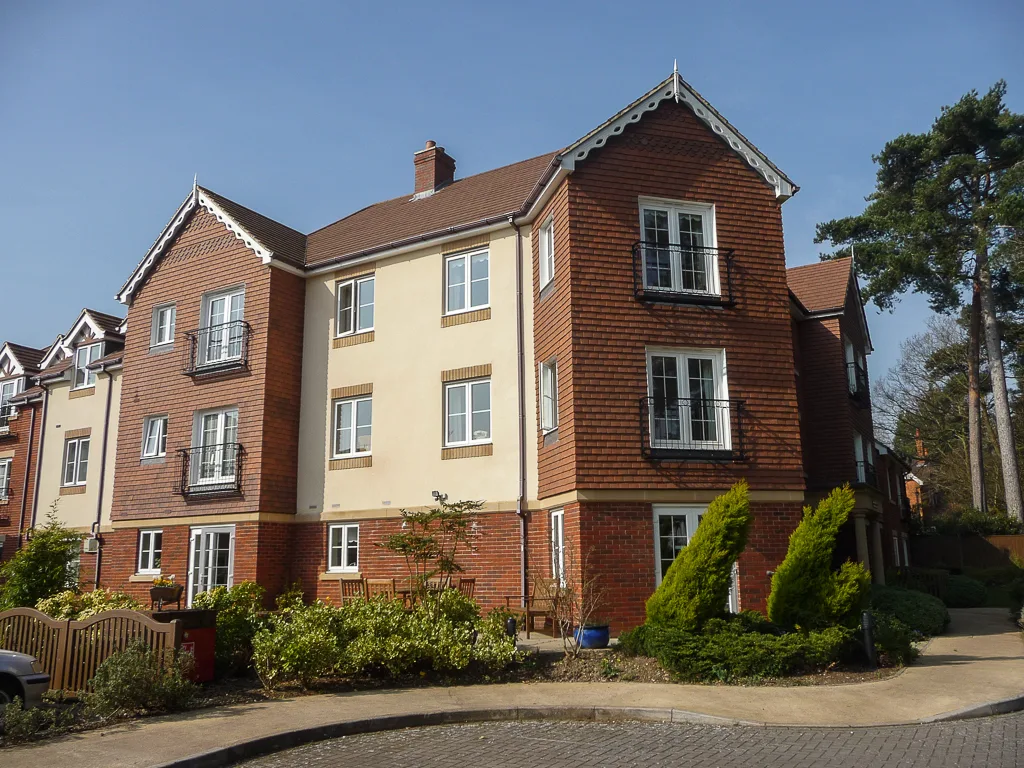

Hart's own risk register says just one housing association will consider affordable homes on schemes under 20 units, and cash may be taken instead of houses.
Only one housing association is currently willing to take on affordable homes built on Hart’s smaller housing sites, and the council says even that cannot be relied on. If no landlord can be found, developers may end up paying cash instead of building the homes.
The warning is in Hart District Council’s own risk register, published on 28 August ahead of a meeting of its Overview and Scrutiny Committee on Tuesday 8 September. (Council Risk Register, half-yearly review)
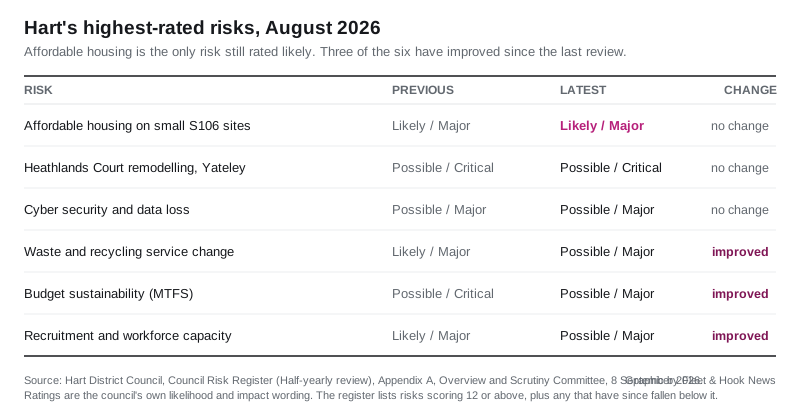
Six risks are set out in full. Affordable housing delivery is the only one still rated “likely”.
What the council is worried about
The risk is specific. It covers affordable homes secured through section 106 agreements, the legal deals a council strikes with a developer when planning permission is granted, and in particular schemes that produce fewer than 20 affordable homes.
Small numbers are hard for a housing association to manage and maintain economically, so few want them. The register puts it bluntly:
The current market remains challenging for schemes delivering fewer than 20 affordable homes. At present, only one local RP appears willing to consider these sites, and this cannot be guaranteed.
“RP” is a registered provider, the formal name for a housing association or other landlord approved to hold affordable housing.
The council lists three things driving the risk:
- the government withdrawing affordable housing grant
- a policy framework that permits financial contributions in lieu where on-site provision cannot reasonably be secured
- viability pressures on developers, and limited appetite among providers for small schemes
Money instead of homes
The register is candid about where that leads. Where every reasonable option for building the homes on site has been tested and none works, the council says a financial contribution in lieu “may ultimately need to be accepted as a fallback position”.
It then sets out the catch in its own words. The money would still be for affordable housing, but “delivery would become less direct and less certain”, because it would depend on finding suitable opportunities, partners and funding packages somewhere else.
In plain terms, a payment now is not a home now, and not necessarily a home in the same village.
Two examples are given of routes that have worked. At Hareshill, an amendment to the legal agreement supported delivery. On another site, which is not named, council officers matched a local charity with a developer as an alternative way of securing the affordable homes.
What else is on the list
The register only reports risks scoring 12 or above, plus any that were at that level last time and have since come down. The council says all six are “within tolerance, with satisfactory remediation plans currently in place”.
Three of the six have improved since the last report:
- Waste and recycling dropped from likely to possible. The council now has certainty on Extended Producer Responsibility funding and its 2026/27 grant is confirmed. Hampshire County Council has paused its new disposal and financial arrangements while it assesses new legislation, and its waste sorting facilities are expected to come on stream in late 2028. An eight-year Serco contract extension keeps collections running in the meantime.
- Budget sustainability eased from critical to major impact, after a balanced budget in 2026/27 and a favourable 2025/26 outturn.
- Recruitment and retention dropped from likely to possible. The council says it has held a stable position for four years and that reorganisation has had no obvious effect on staffing so far.
Two are unchanged alongside the housing risk:
- Cyber security, rated possible with a major impact. The council says attempted attacks remain frequent across the public sector but its monitoring and defences match government-recommended practice.
- Heathlands Court in Yateley, the council’s 23-flat temporary accommodation block, where the risk is that a £3m remodelling runs late. The funding agreement has been signed and detailed floor plans are in, ahead of the tender and planning stages. A delay would mean longer reliance on bed and breakfast for homeless households.
2027/28 is expected to be Hart’s last budget
Buried in the budget entry is a firm date for the council’s own end. It reads: “Local Government Reorganisation means 2027/28 is expected to be the final budget year for Hart District Council.”
Officers say they are working with colleagues across Hampshire to hand a strong financial position to what the report calls the new North Hampshire Unitary Council. The waste entry adds that major service changes are unlikely before vesting day for that new authority.
Update, 11 September 2026: the risk register was written before the government withdrew the North Hampshire decision on 7 September. Hart is no longer scheduled to be abolished in April 2028, so on current plans 2027/28 will not be its last budget. Our report: Hart council merger withdrawn.
What it means for you
If you live near a small housing scheme with permission, the affordable homes promised in its section 106 agreement are the ones most at risk of turning into a cash payment. Planning documents for any Hart application, including the legal agreements, are on the council’s public access register; we track the weekly lists on our Fleet planning news page.
If you are on the housing register, the council is separately spending £5.5m buying homes on the open market and converting them. One and two-bedroom homes will go to homeless families. Accessible bungalows and four-bedroom houses will go to people on the waiting list. The council says all of them will go to applicants with a local connection to Hart, and that it will keep nomination rights in perpetuity. (Hart District Council, 25 August)
If you want to say something about any of this, the Overview and Scrutiny Committee meets at 7pm on 8 September in the Council Chamber, and anyone wanting to make a statement has to contact Committee Services at least two clear working days beforehand. (Agenda, 8 September)
The committee passes its comments to Cabinet, which last considered the register in June 2026.
Have your say